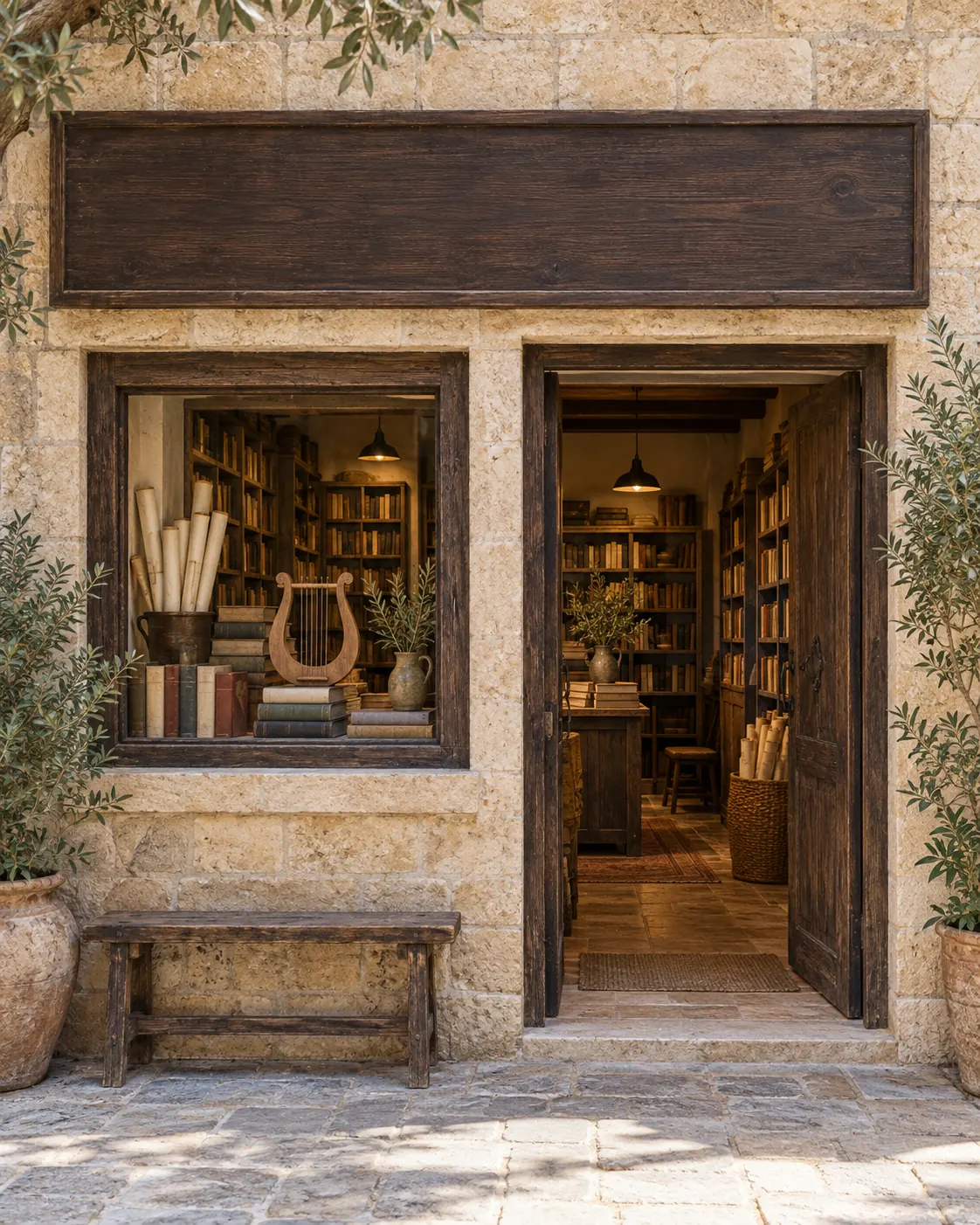
The sons of Korah are not one writer with a recoverable personal biography. Their name appears in the headings of a group of biblical psalms and is associated with a tradition of Temple singers. These headings preserve a collective connection; they do not allow us to identify a single author, assign a lifespan, or know exactly when each poem was composed. The Book of Psalms itself brings together collections shaped and transmitted over time, and its individual songs speak in several voices.
The selections here come from psalms bearing that traditional association: 42, 46, 49, 84 and 85. They include longing for God, trust amid upheaval, reflection on wealth and death, the desire for a sacred home, and prayer for restoration. A first-person sentence is therefore not automatically an autobiographical statement by a known individual. These are sacred poems within Jewish and Christian traditions, with a history of communal reading and worship. Alrewaq keeps that setting visible while allowing readers to notice their images and questions. The King James Version supplies the English wording, and the verse numbers below follow that translation; editions that count the headings as verses may number them differently.
Quotations retain the wording of the cited editions. The explanations are Alrewaq’s editorial readings.
01Trust amid upheaval
Be still, and know that I am God
This is divine speech in a psalm about conflict, upheaval and God’s sovereignty. Its stillness is not merely a relaxation technique. Readers who share its faith may dwell in that address; other readers can notice the kind of trust the sacred poem gives voice to.
Source & edition · Trust amid upheaval
Psalm 46 Verse 10 · King James numbering
King James Version (1611)
Excerpt; the psalm is associated with the sons of Korah in its superscription.
As the hart panteth after the water brooks, so panteth my soul after thee, O God.
A deer’s thirst becomes the image for longing for God’s presence. The wider psalm includes tears and a remembered worshiping community, not uninterrupted certainty. Our reading allows longing to be spoken honestly, without treating sadness as proof that faith or hope has failed.
Source & edition · Thirst for presence
Psalm 42 Verse 1 · King James numbering
King James Version (1611)
The superscription’s Korahite attribution is also visible in the linked USCCB biography source.
The psalm’s birds and their nests belong to a prayer of longing for God’s dwelling. The small image makes sacred belonging tangible. The image expresses the worshiper’s longing for God’s dwelling.
Source & edition · A place to belong
Psalm 84 Verse 3 · King James numbering
King James Version (1611)
Opening clause of the verse; the poem’s heading identifies it with the Korahites.
Mercy and truth are met together; righteousness and peace have kissed each other.
The poem imagines a restored world in which qualities that can feel opposed meet in harmony. It follows a communal plea for divine favor. Our reading asks what a peace joined to truth and justice might require, rather than treating the absence of argument as enough.
Source & edition · When peace meets justice
Psalm 85 Verse 10 · King James numbering
King James Version (1611)
The poem’s heading identifies it with the Korahites; this is an image within a prayer for restoration.
Psalm 49 addresses the apparent security of wealth in the face of death. Its response belongs to the psalmist’s trust in God, not a claim that material hardship is unimportant. Our reading asks what deserves care when ownership cannot offer permanent protection.
Source & edition · What possessions cannot secure
Psalm 49 Verse 17 · King James numbering
King James Version (1611)
Opening clause of the verse; the poem’s heading identifies it with the Korahites.